
On Iran: Raise High the Banner of Peace and Justice!
 Author:
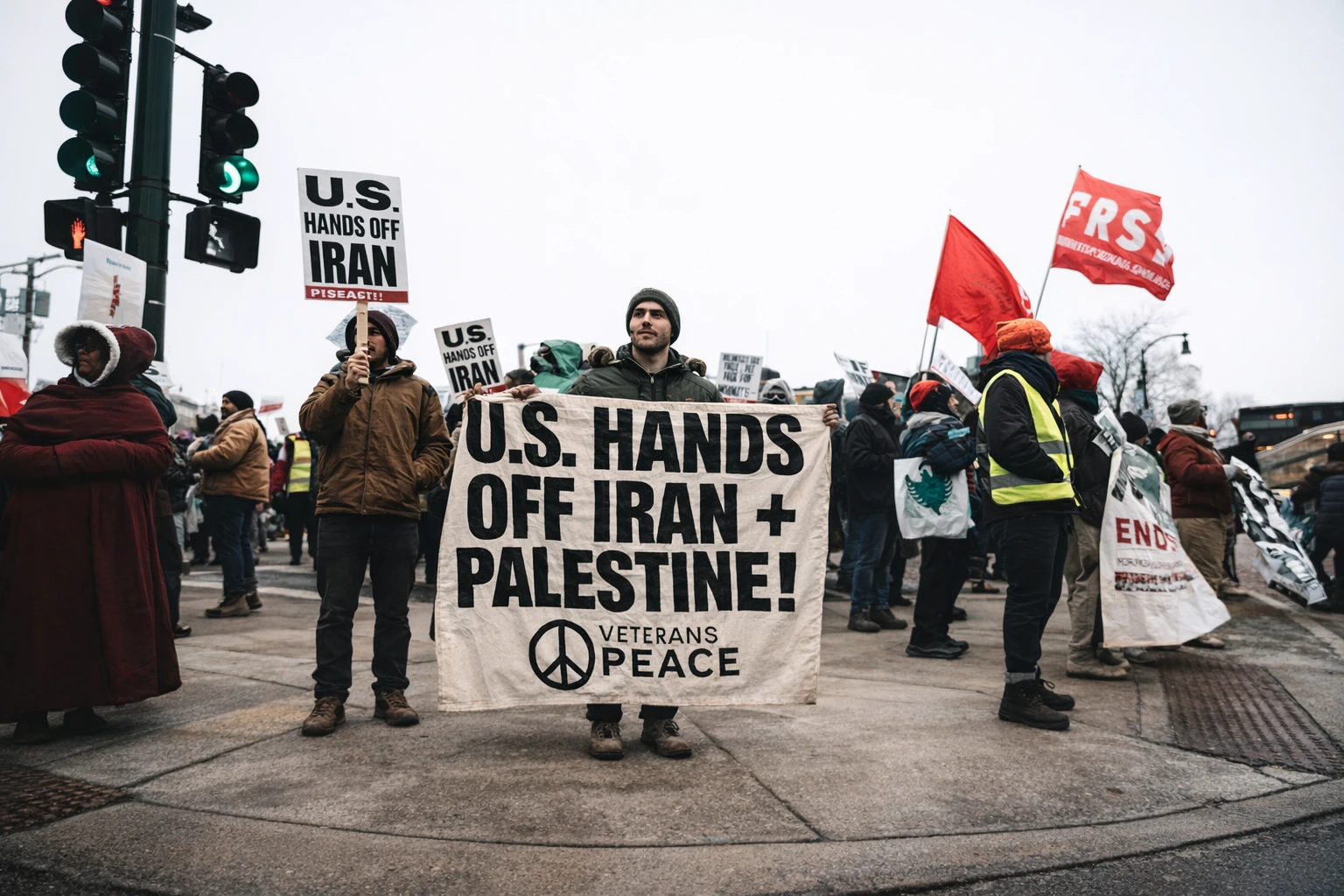
All humane and responsible people must express serious concern at the escalating conflict in West Asia following the U.S. and Israeli military strikes on Iran on 28 February 2026. These attacks follow the June 2025 U.S. airstrikes on Iran’s nuclear facilities and form part of a broader pattern of repeated military interventions during the current U.S. presidency. Recent operations have included strikes and a Special Operations raid in Venezuela, airstrikes in Nigeria and Somalia, actions in Iraq and Yemen, and multiple strikes in Syria.
These military actions have been accompanied by overt threats—against Colombia, regarding the Panama Canal, and even the possibility of acquiring Greenland through force. Cuba has faced intensified blockade rhetoric, Canada has faced annexation language and sanctions threats, and sweeping tariff threats were issued against trading partners worldwide, including India. Such volatility reflects a dangerous normalization of coercive power in global affairs.
While the tone may appear erratic or theatrical, the consequences are real. We must consider not only the immediate destruction but also the longer-term transformation of the global order that such actions may accelerate.
The Unfulfilled Promise of Multilateralism
The formation of the United Nations in 1945 represented one of humanity’s most hopeful commitments—a collective resolve to prevent another world war and to ground international relations in law, dialogue, and cooperation. Yet from its inception, structural inequalities limited its transformative potential. The veto power granted to five permanent Security Council members concentrated decisive authority in a small group of states.
During the Cold War, ideological rivalry often paralysed the UN. In the post-9/11 era, major interventions proceeded with limited or contested UN backing, further weakening multilateral authority. In recent years, while UN mechanisms continue documenting atrocities, geopolitical divisions have frequently obstructed enforcement and accountability. The gap between principle and practice has widened.
Militarisation is an Assault on the Global South
When global politics is driven by force rather than principled diplomacy, power asymmetries tend to deepen. A genuinely rules-based international order—grounded in equal sovereignty, fair trade, climate justice, and democratic multilateralism—would challenge long-standing structural inequalities between North and South. It would demand reform of global financial systems, fairer access to technology and markets, accountability for historical emissions, and greater voice for post-colonial nations in international institutions.
Militarization, however, often reinforces the opposite trajectory. Strategic competition over resources, shipping routes, and geopolitical influence can reduce many Global South countries to arenas of rivalry or sources of raw materials, energy, and cheap labour. Security partnerships and arms transfers may entrench elite power structures while diverting public resources away from social investment. At the same time, trade regimes and debt arrangements can perpetuate dependency, positioning large segments of the Global South as an economically vulnerable and politically marginalized workforce within the global system.
When diplomacy gives way to dominance, structural transformation becomes harder to pursue. A more principled international order—centred on equity, development, and shared prosperity—remains essential if global relations are to move beyond patterns that reproduce inequality and disenfranchisement.
The Hope Lies in Assertions of Sovereign States and Popular Mobilisations for Peace and Justice
At a time when populist nationalism, elite power politics, and the open glorification of militarism dominate headlines, and international institutions appear hesitant in the face of devastating conflicts, there was another story quietly unfolding. The global ceasefire movement for Gaza marked a powerful moral awakening. Millions worldwide demanded an end to violence, civilian protection, and humanitarian access. Across the Global South, governments, led by South Africa called for accountability and equal application of international law—reviving traditions of anti-colonial solidarity and affirming justice and dignity for all. From protests against war and occupation to movements for racial justice, climate action, democratic accountability, and economic equality, ordinary citizens are reclaiming their voice in shaping political futures.
The hope lies in this convergence: grassroots moral outrage meeting diplomatic courage. It signals that despite deep geopolitical fractures, a global conscience is alive. It is in this collective insistence, that lies the possibility of a more just international order grounded in equality, accountability, and shared humanity. So let us raise high the banner of peace and justice!